

Life After Exit: What Comes Next
The exit isn't the end of the story, but the beginning of another. What really happens 6, 12, 24 months after sale or IPO — identity, financial, family, professional. Why most founders underestimate how hard the first post-exit year is, and what helps. Written by a founder-CEO without exit experience, but with peer group of 15+ post-exit founders.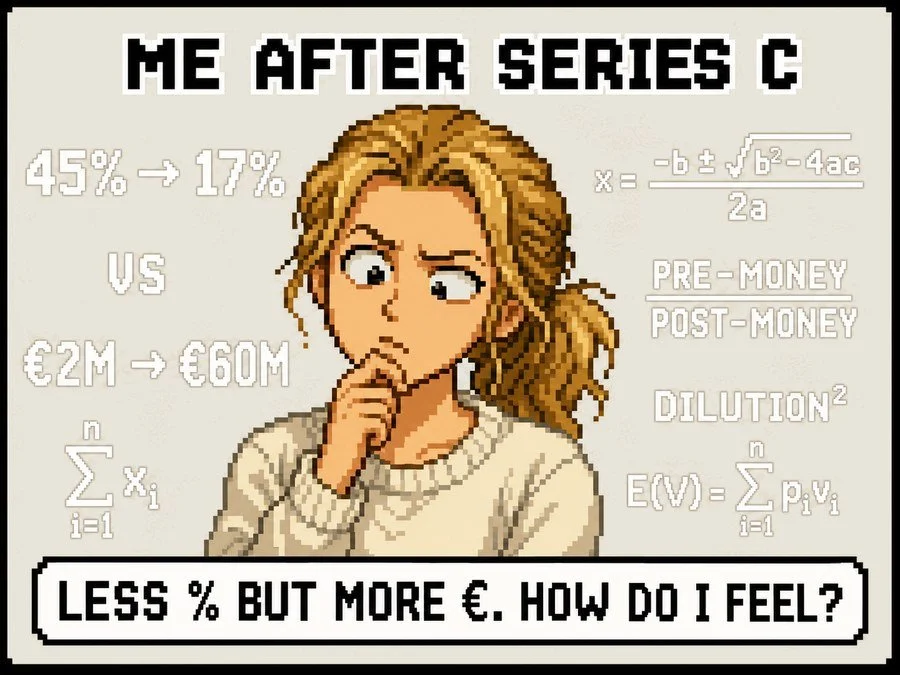
Ownership Loss After Series B: When You're No Longer Majority Shareholder
After Series B most founders have under 50% of shares — and can still be CEO. How to keep your power position when shares dwindle: contract rights, board composition, voting structure, founder rights in the articles. Written by a founder-CEO after 6 years of cap-table evolution.
Becoming a Father as a Founder: The Hardest Transition
Having a child during Series A/B is the hardest transition in founder life — harder than any fundraising round because it's permanent and irreversible. What really changes, which expectations are wrong, how to structure company and fatherhood in the first 12 months without ruining both. Honest, without advice-column tone.
Founder Depression: The Silent Crisis No One Talks About
Depression hits founders more often than the general population — but no one talks about it, because "successful founders don't get depressed." They do. The silent symptoms, the early warning signs, when professional help becomes indispensable, and how I got through my own crisis in 2023. A personal piece by a founder-CEO, without advice-column tone.
Am I Still the Right CEO? An Honest Self-Check
The question "am I still the right CEO?" isn't weakness — it's maturity. Most founders ask it too late (after the board already does) or too early (at first self-doubt). The structured 5-axis check I go through every 6 months: skills, energy, passion, team signal, company fit. Written by a founder-CEO after 8 years of SECJUR.
When Your Board No Longer Trusts You: Rebuilding in 90 Days
Board trust loss is usually not a single incident — it's a series of small signals that accumulate. How to recognize you've lost trust, which 5 actions rebuild it (and which 3 accelerate destruction), and when rebuilding is hopeless. Written by a founder-CEO after the down round 2023.
Undoing a Mishire: 90-Day Framework
Every founder makes mishires — the only question is how fast they correct them. The 90-day framework for structured correction: diagnosis (onboarding problem vs. fit problem), improvement plan, clear decision. How to minimize costs, protect team signal, and not get emotionally tangled. Written by a founder-CEO with 3 documented mishires.
Board Meetings That Don't Hurt: Structure for 4x per Year
Board meetings are the most expensive calendar event in the startup — 15+ hours prep, 3-4 hours meeting, 2-3 hours follow-up. Whoever runs them badly loses trust; whoever runs them well gains alignment. The framework for a 3-hour board meeting with strategic substance instead of status-update theater. Written by a founder-CEO after 20+ board meetings.
Investor Reporting Frequency: What, How Often, How Honest
Too little reporting: investors get suspicious. Too much: you drown in overhead. What good investor reports contain, which frequency makes sense, how to communicate bad news — and why "good" reports are often the wrong ones. Written by a founder-CEO with 40+ investor updates sent.
Resolving Co-Founder Conflict: 90 Days Before It Gets Expensive
Co-founder conflicts kill more startups than product or market. What conflict patterns to spot early, how mediation is structured, when external counsel is needed — and when separation is better than continued fighting. Written by a founder-CEO with 3 co-founder experiences and a business criminal lawyer.
Firing a Senior Employee: How, When, with What Legal Consequences
Firing a senior employee is legally complex and emotionally expensive. What to consider — from wrongful-termination suits to settlement agreements to ESOP clauses. How to preserve team signaling and act legally sound. Written by a founder-CEO and business criminal lawyer.
Hiring Your First VP: Why Most Founders Get the Timing Wrong
The first VP is the most expensive hiring mistake in the startup — not because of salary, but because of the 6 months you lose when they don't fit. When you really need a VP, how interview design works, which traps lurk in compensation and expectations. Written by a founder-CEO who hired 5 VPs and let 2 go.
NDA Template for Startups: 7 Clauses You Need, 3 You Must Strike
The standard NDA from the internet is usually formulated against you — even when your lawyer sends it. The 7 clauses a really functioning startup NDA needs, which 3 standard clauses you must immediately strike, and when an NDA even makes sense. Written by a founder-CEO who has signed both sides.
Directors' Liability in Germany: When You're Personally on the Hook
The GmbH is supposed to be liability limitation — until 12 different laws tell you that you're personally liable. Delayed insolvency filing, taxes, social contributions, GDPR, antitrust: the concrete liability traps for founder CEOs, what each costs, and how to protect yourself. Written by a founder-CEO and business criminal lawyer.
Board vs. Beirat vs. Advisory: What Makes Sense When
Advisory, Beirat, or a real Aufsichtsrat? For most startups all three are wrong — up to a certain size. What each structure legally means, where founders regularly over- or under-formalize, and when which transition makes sense. Written by a founder-CEO who went through all three stages at SECJUR.
Reading a Term Sheet Like a Lawyer: The 10 Clauses That Matter
A term sheet looks harmless — until you realize 3 sentences in the fine print determine your cap table for 5 years. The 10 clauses that really matter, what's negotiable, and where founders regularly get taken advantage of. Written by a founder-CEO and white collar crime lawyer.
Land Charges Against Business Credit: What You Must Tell Your Family Beforehand
Land Charges Against Business Credit: What You Must Tell Your Family Beforehand
Bad-Leaver, Good-Leaver: Who Decides and When It Triggers
Bad-leaver / good-leaver classification decides whether you keep or lose vested shares on exit. Who decides in practice, which definitions are legally sustainable, and how you as founder protect yourself against arbitrary classification. Written by a founder-CEO and business criminal lawyer.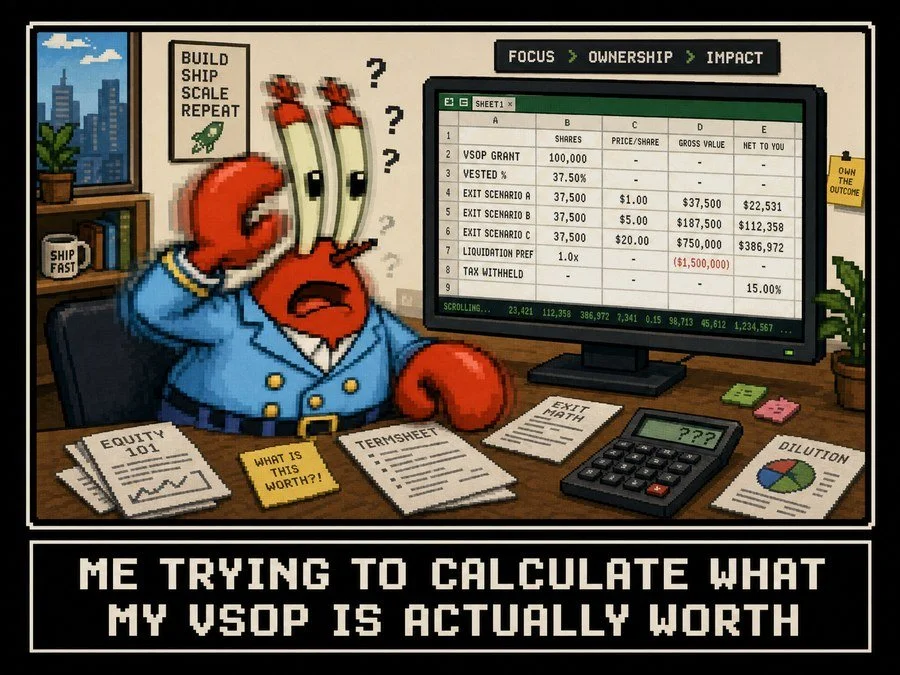
VSOP for Employees: What Your Lawyer Won't Tell You
VSOP is the German standard answer to US ESOPs. But most templates have structural weaknesses that get expensive at exit or employee departure. What your lawyer won't tell you by default, why standard templates are dangerous, and how to structure VSOP truly employee-friendly. Written by a founder-CEO who set up a VSOP program for 50+ employees.
Vesting Clause in the Founder Agreement: The 5 Traps
Vesting clauses determine what happens to your founder shares when you exit. The 5 most common traps founders fall into — and why the internet standard template is almost always wrong. Written by a founder-CEO who has adjusted own contracts and those of other founders multiple times.